DIM SUM MONTH FINALE: Tapenade short ribs, plus dim sum party game plan
AT LAST, DIM SUM MONTH FINALE
DIM SUM MONTH STILL CONTINUES… OK, I know it's not February anymore, but there's still a couple more dim sum I want to share so DIM SUM MONTH is oozing into March a bit
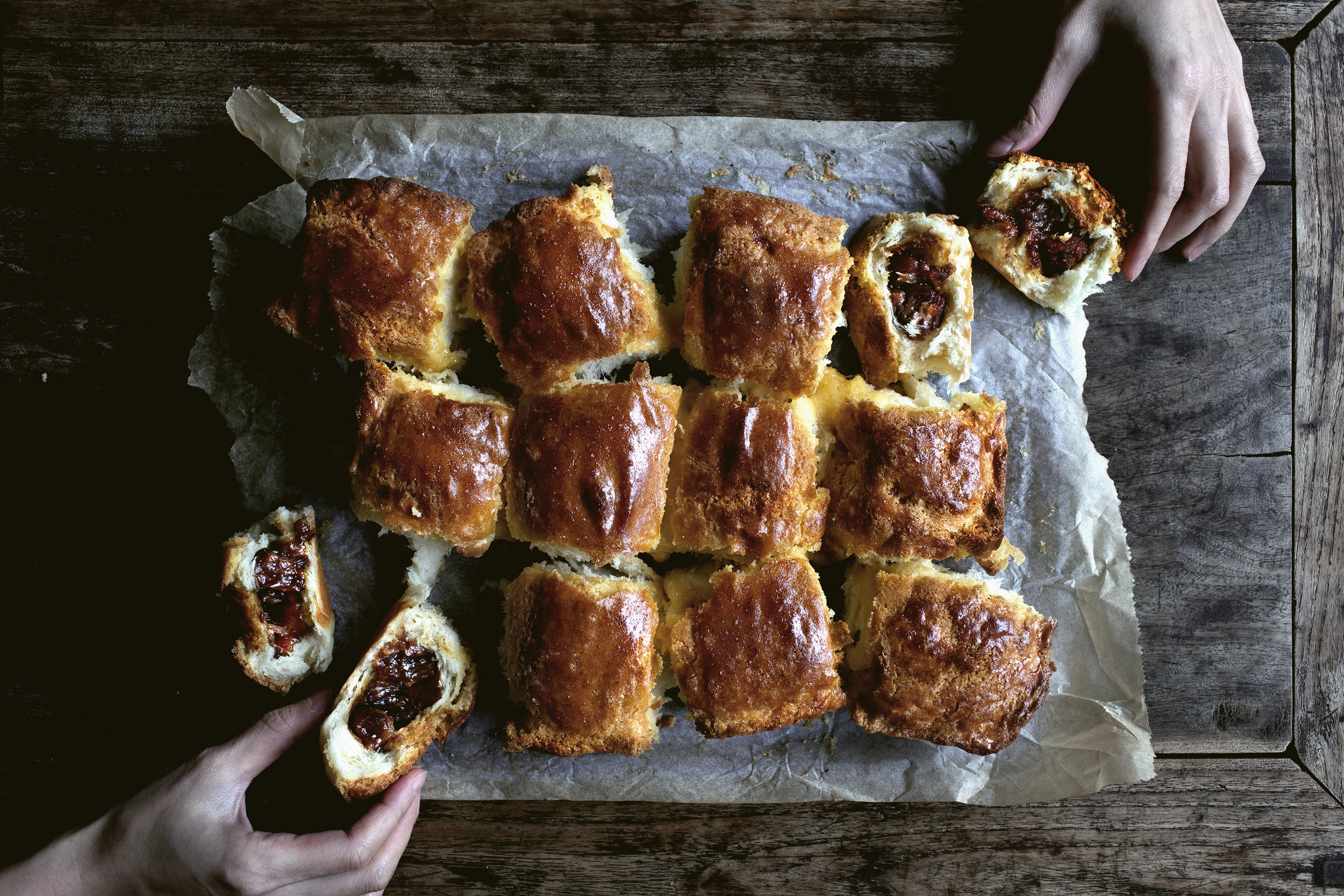
[ezcol_1half] DIM SUM MONTH CONTINUES… WHAT: Super cute and tiny steamed buns stuffed with braised pork belly, pan-fried capers and smooth peanut butter. WHY: It's pork bun in baby form! It's pork bun in two-bites size! It's pork bun but pop-able! Dispute settled. HOW: The idea is to create an over-the-top, porky, fatty and gooey bun-tasy with a built-in acidic element to balance it all out, and this is what came out on the other side. Inspired by traditional Taiwanese guabao (which is the former life of David Chang's infamous "pork bun"), the pork belly is first braised with aromatics and spices until melty and tender, but instead of ground peanuts that's used in guabao, smooth peanut butter is being introduced. Just when pork belly and peanut butter - both fatty, gooey and intense - are locking tongues in your mouth, the taste buds get a sharp and pleasant zing of acidity and pickle-ness from pan-fried capers, all swirling and dancing inside this slightly sweet and chewy dough. What's more wrong? Eating just one or more? I can't decide. By the way, most of the recipes in DIM SUM MONTH is designed to be prepared ahead of time. Make each items and store them in the freezer, and at
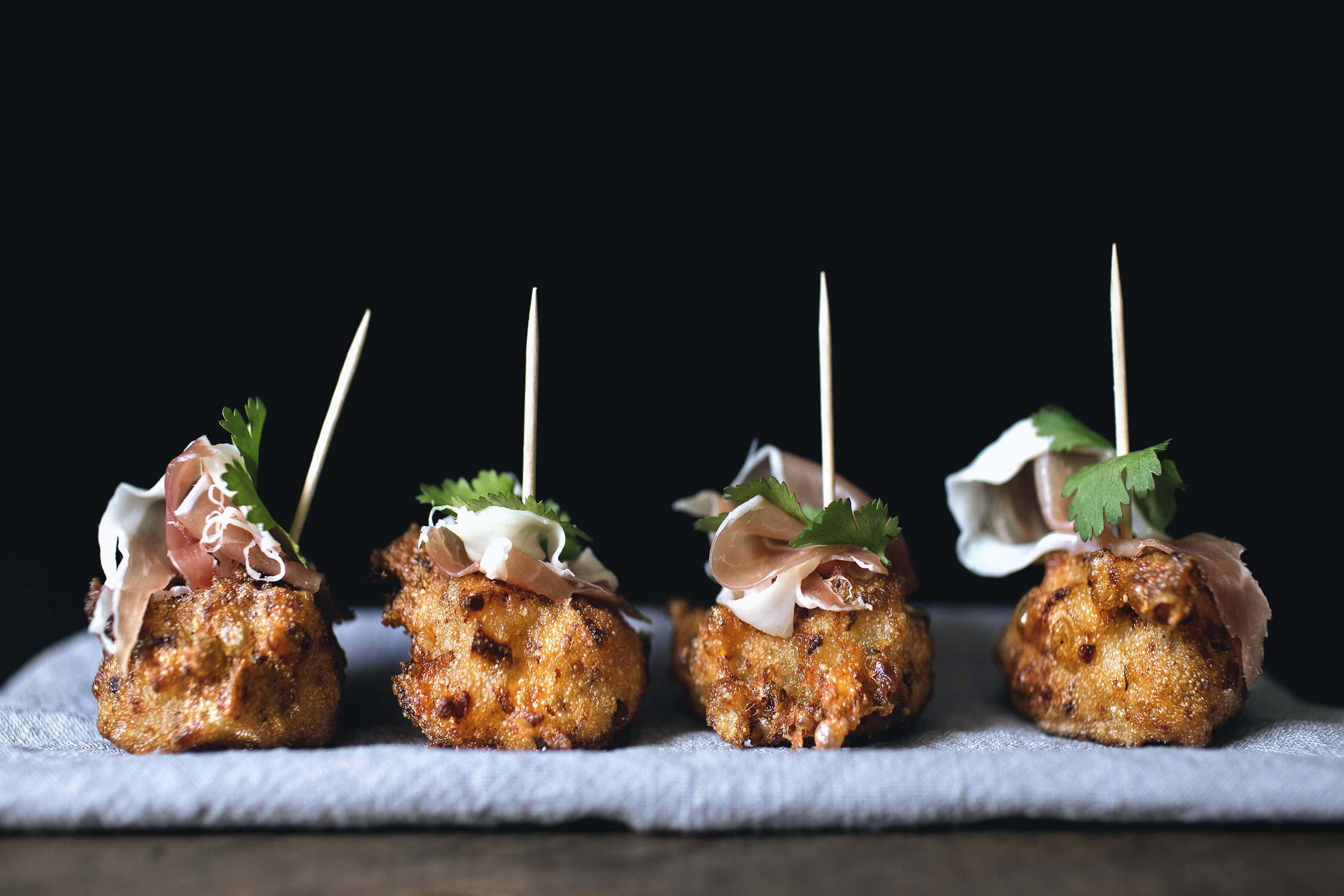
DIM SUM MONTH CONTINUES… WHAT: A very logical and long-overdue twist on the classic and quintessential dim sum - turnip/radish cake, in bite-size fritter form. WHY: For far too long have we allowed ourselves to be complacent with "tradition", in this particular case, boring and bland squares of steamed rice cakes barely containing any turnips that draw all of its flavors and appeals from the XO sauce that is piled on top. I mean think about it. Without the XO sauce, who the fuck is turnip cake? Even the slight attraction from its crispy pan-fried edges is more often missing than not. But turnip cake deserves more than XO sauce, if we just take a moment to let the star - turnips! - shine through. HOW: An almost 50:50 ratio of finely diced Chinese turnips (or called daikon in Japanese) to batter, yields a supple and succulent texture in these little babies, almost juicy if you will. Yes, juicy, which is not a word you hear often when it comes to turnip cakes, but it should. Each tiny dices of blanched turnips burst out in natural sweetness within every bite, in perfect juxtaposition to the stickier batter that holds them all together and the incredibly crispy jacket that
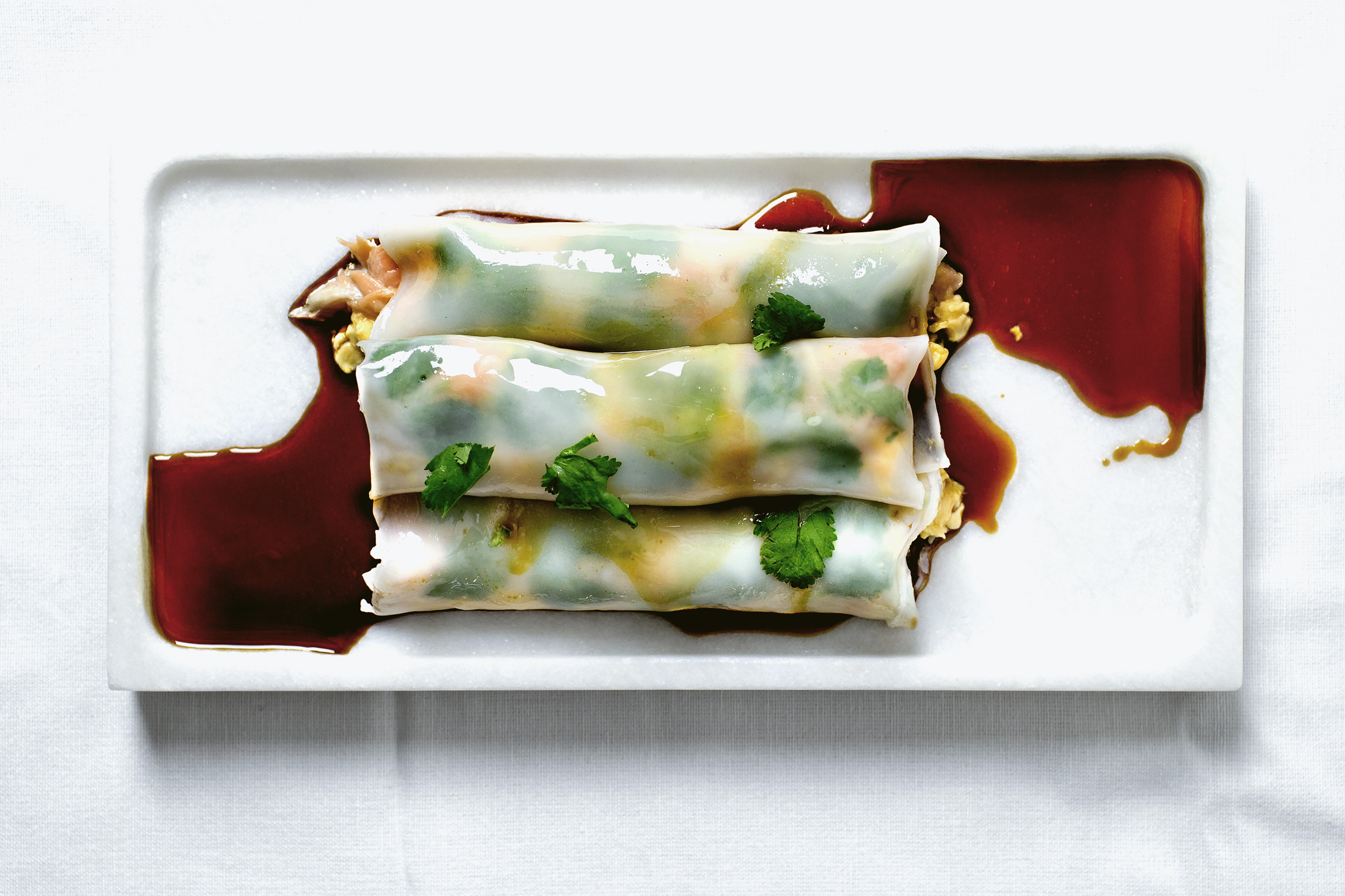
DIM SUM MONTH CONTINUES… WHAT: Stuffed rice wrapper rolls they call "cheung fun"! WHY: These gorgeous and elegant beauties are often overlooked on the dim sum table because of their less flashy appearances, mellow flavor profiles, and batters with the wrong ratio that results in unfortunate, mushy-textured wrappers. Well, that ain't their fault, in fact, cheung-fun is the most versatile blank canvas waiting for someone who appreciates its possibilities. HOW: In restaurants, this dish is always made to order. The rice batter is usually steamed with the filling on top then rolled into a log and served with sweet soy sauce. This method has its virtues but also, many flaws. It is convenient from a restaurant's perspective, allowing them to serve the dish hot and speedy, but not necessarily so from a creative point of view. Making the dish to order will be unrealistic to pull off for at-home dinner parties, and steaming the wrappers and the fillings simultaneously will greatly limits its possibilities. So, we are going to prepare the rice wrappers beforehand, and assemble them with the filling at the last minute. In my wildest dreams where money flows like abs in a Channing Tatum movie, I would make the filling with gently poached lobster meat
DIM SUM MONTH CONTINUES
[ezcol_1half] EXACTLY WHAT DIM SUM IS SUPPOSED TO, BUT SOMEHOW FORGOTTEN TO BE, LITERALLY, AS TO TOUCH HEART [/ezcol_1half] [ezcol_1half_end] Welcome to DIM SUM MONTH! WHAT: I'm dedicating this whole month to the delicate art that is dim sum. WHY: I'm slowly and painfully realizing how scarce a good, thoughtful and delicious dim sum can be. Even in Hong Kong - the supposedly promised land of dim sum - I found my expectation being shattered with sloppy, tired, and borderline unethical display of dimness. Frankly, I'm fed up. HOW: Just as unfamiliar as most of you are in terms of making dim sum, I'm going to show you that it is possible for us to create these little baskets of happiness at home. We are going to take each conventional dim sum item, and mix them with a bit of thoughtfulness and fun. Almost every items can be made ahead of time, and hopefully at the end of the month, we'll be able to host our own dim sum party that is more awesome than most. Let's start with the classic of the classics - crystal shrimp dumplings. We are going to correct all of its frequently ignored mistakes: soggy and texture-less wrappers, and frankly, boringness. This recipe will yield a wrapper that
ASIAN SOUTHERN ALMOND MILK, WITH THAT DISTINCTIVELY FLORAL AROMA AND REMEDIAL RICHNESS THAT WORKS SO FLAWLESSLY WITH THIS TRADITIONAL SOUP, ELEVATING IT TO NEW HEIGHT [ezcol_1half] I've always pondered about almond, well, not specifically about what this word would mean to most of you, which is probably something like American sweet almond, with narrow leaf-drop shape and minimum coolosity inside what is already not-so-exciting trail mixes. But I'm talking about what is also called "almond" in Asia. Same name, but entirely different characteristics. Asian almond is much smaller with flat heart-shaped profile, but most importantly, an immediate, elegant and floral scent separates itself from the American variety. You could identify that scent/flavour if you are familiar with almond extracts or some marzipans, unique, subjective, and hard to describe. Why both "almond" and yet so different? Well, because they aren't the same thing to begin with. American almond is the kernel of a fruit in the drupe family (Prunus dulcis) (see comments for extra information), whereas Asian almond is actually the kernel of apricot. And it's extremely important to note that in Asia, even the word "almond" comes in two different, and mostly, dangerous distinctions. Southern almond (Prunus armeniaca L.), sweet, floral and nourishing, is the common ingredient we consume in both dessert